

Every workplace is shaped by the decisions people make each day—from hiring new employees and assigning projects to conducting performance reviews and selecting future leaders. While these decisions are often made with the best intentions, they can still be influenced by unconscious bias.
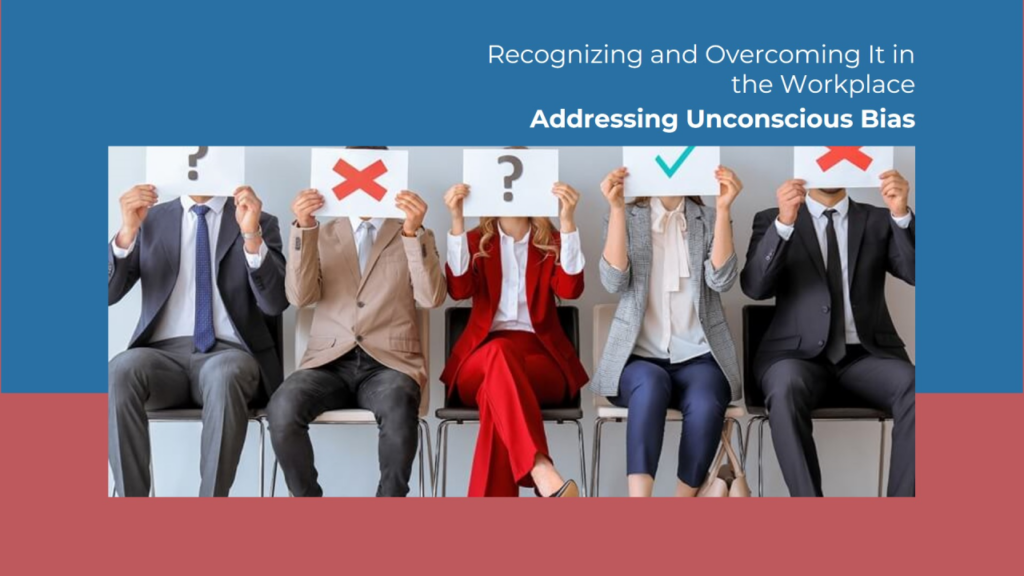
Unconscious bias refers to the automatic assumptions, preferences, or stereotypes people develop over time based on their experiences, culture, and environment. These biases operate without deliberate intent, making them difficult to recognize but capable of influencing workplace outcomes in meaningful ways.
For organizations committed to building diverse, equitable, and inclusive workplaces, recognizing unconscious bias is an important first step. More importantly, leaders and employees must understand how to minimize its impact through consistent, practical actions.
This guide explores common examples of unconscious bias in hiring, promotions, meetings, and performance reviews, along with strategies to create fairer decision-making across the workplace.
What Is Unconscious Bias?
Unconscious bias consists of automatic mental shortcuts that help people process information quickly. While these shortcuts can simplify everyday decisions, they can also lead to unfair assumptions about others.
Unlike intentional discrimination, unconscious bias often occurs without awareness. A manager may genuinely believe they are making objective decisions while unknowingly favoring people who remind them of themselves or overlooking valuable contributions from quieter team members.
Recognizing that everyone has unconscious biases creates an opportunity to improve workplace systems rather than assign blame.
Why Addressing Unconscious Bias Matters
Unchecked bias can influence many aspects of the employee experience, including recruitment, career development, collaboration, and performance evaluation.
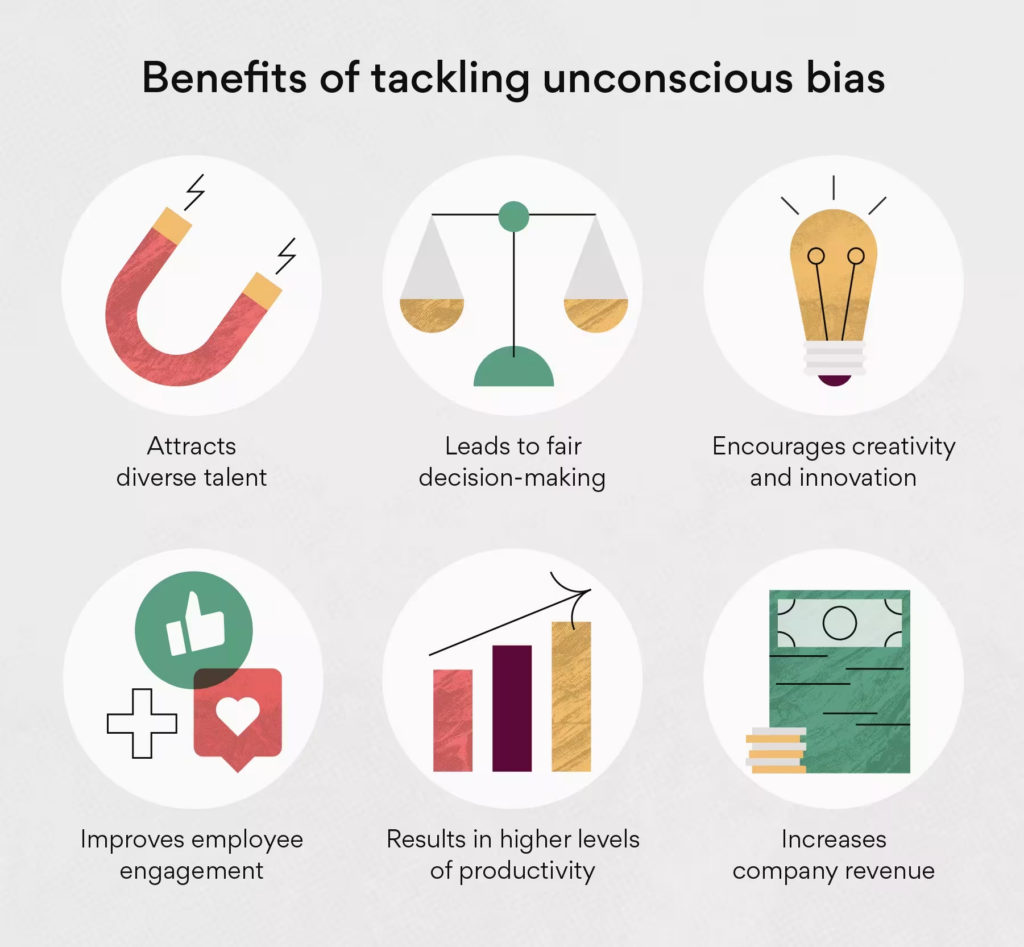
Organizations that actively reduce bias often benefit from:
- Fairer hiring decisions
- Greater employee trust
- Higher engagement
- Improved collaboration
- Increased innovation
- Better talent retention
- Stronger leadership pipelines
When employees believe opportunities are based on merit and fairness, they are more likely to contribute confidently and remain committed to the organization.
Common Types of Unconscious Bias
Understanding the most common forms of bias makes them easier to recognize in everyday situations.
Affinity Bias
Affinity bias occurs when people naturally favor individuals who share similar backgrounds, interests, experiences, or communication styles.
For example, a hiring manager may feel a stronger connection with a candidate who attended the same university or shares similar hobbies, even if another candidate is equally or more qualified.
Confirmation Bias
Confirmation bias involves seeking information that supports existing beliefs while overlooking evidence that challenges those assumptions.
For instance, if a manager believes an employee is highly dependable, they may focus on examples that reinforce this perception while dismissing instances where deadlines were missed.
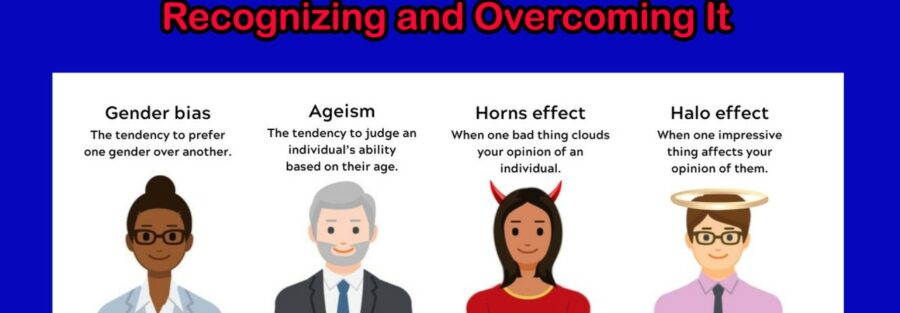
Halo Effect
The halo effect happens when one positive characteristic influences the overall perception of a person’s abilities.
An employee who delivers an excellent presentation may later be assumed to excel in unrelated areas without sufficient evidence.
Horn Effect
The opposite of the halo effect, the horn effect occurs when one negative experience unfairly shapes overall evaluations.
A single mistake may overshadow months of consistently strong performance.
Similarity Bias
Managers sometimes gravitate toward people who think, communicate, or solve problems similarly to themselves.
While this may feel comfortable, it can reduce diversity of thought and limit innovation.
Unconscious Bias in Hiring
Recruitment is one of the areas where unconscious bias can have the greatest long-term impact.
Even small preferences during hiring decisions can influence workforce diversity and limit access to opportunities.
Practical Example
A recruiter reviews two resumes with nearly identical qualifications.
One candidate attended a familiar university and previously worked for a well-known company. The other has equivalent experience from smaller organizations.
Without realizing it, the recruiter may perceive the first candidate as more capable simply because their background feels more familiar.
How to Reduce Bias in Hiring
Organizations can improve fairness by:
- Writing inclusive job descriptions using clear, objective language.
- Focusing on essential qualifications rather than unnecessary requirements.
- Using structured interviews with standardized questions.
- Evaluating candidates against consistent scoring criteria.
- Including diverse interview panels whenever possible.
- Reviewing hiring decisions collaboratively.
Structured recruitment processes reduce opportunities for subjective judgments.
Unconscious Bias in Promotions
Promotion decisions shape future leadership and employee motivation. Bias in these decisions can unintentionally limit career advancement for qualified employees.
Practical Example
A manager consistently assigns high-visibility projects to employees who speak confidently during meetings.
Meanwhile, employees who contribute thoughtful ideas in writing or smaller group discussions receive fewer opportunities to demonstrate leadership.
Over time, those receiving greater visibility are more likely to earn promotions.
How to Improve Promotion Decisions
Leaders should:
- Define transparent promotion criteria.
- Evaluate measurable performance outcomes.
- Review advancement decisions across teams.
- Encourage managers to identify a broad range of leadership potential.
- Ensure development opportunities are accessible to all employees.
Promotion decisions should reflect demonstrated capability rather than familiarity or visibility alone.
Unconscious Bias in Meetings
Meetings provide opportunities for collaboration, but unconscious bias can influence whose voices are heard and whose ideas receive recognition.
Practical Example
During a team discussion, one employee suggests an idea that receives little attention.
Later, another colleague presents a similar idea, and the team responds enthusiastically.
Without intending to, participants may have given more weight to one person’s contribution based on familiarity, confidence, or seniority.
Building More Inclusive Meetings
Managers can create more balanced discussions by:
- Inviting contributions from everyone.
- Preventing frequent interruptions.
- Rotating meeting facilitators.
- Acknowledging the original source of ideas.
- Allowing written input before or after meetings.
- Creating opportunities for quieter employees to participate.
Inclusive meetings encourage broader participation and improve decision-making.
Unconscious Bias in Performance Reviews
Performance evaluations significantly influence compensation, promotions, and career development.
Subjective impressions can unintentionally affect ratings if managers rely on memory rather than documented evidence.
Practical Example
An employee who recently completed a successful project receives a highly positive evaluation because recent achievements are more memorable.
Another employee delivered consistently strong work throughout the year but receives less recognition because earlier accomplishments are overlooked.
This is an example of recency bias influencing performance assessments.
Improving Performance Reviews
Organizations can strengthen fairness by:
- Using objective performance metrics.
- Collecting feedback from multiple sources.
- Documenting achievements throughout the review period.
- Evaluating employees against clearly defined expectations.
- Training managers to recognize common evaluation biases.
Evidence-based reviews create greater consistency and transparency.
Practical Strategies to Reduce Unconscious Bias
While eliminating unconscious bias entirely may not be possible, organizations can significantly reduce its influence through thoughtful systems and consistent habits.
Standardize Decision-Making
Whenever possible, establish structured processes for:
- Recruitment
- Promotions
- Performance evaluations
- Compensation decisions
- Project assignments
Clear criteria reduce reliance on instinct alone.
Slow Down Important Decisions
Bias often becomes stronger when decisions are made quickly.
Before making significant choices, ask:
- What evidence supports this decision?
- Am I evaluating everyone consistently?
- Have I considered alternative perspectives?
- Would I make the same decision if this person’s background were different?
Taking time to reflect improves objectivity.
Seek Multiple Perspectives
Including different viewpoints reduces the likelihood that one person’s assumptions will determine important outcomes.
Collaborative decision-making often produces more balanced results.
Encourage Feedback
Employees can help identify patterns leaders may not notice.
Organizations should create safe ways for employees to provide feedback about workplace experiences, hiring processes, leadership practices, and career development opportunities.
Constructive feedback supports continuous improvement.
Use Data to Identify Patterns
Regularly reviewing workplace data can highlight areas where bias may unintentionally influence decisions.
Useful metrics include:
- Hiring outcomes
- Promotion rates
- Employee retention
- Performance ratings
- Participation in development programs
- Employee engagement surveys
Data helps organizations focus on systemic improvements rather than isolated incidents.
Building Awareness Across the Organization
Reducing unconscious bias is not solely the responsibility of managers or human resources. Every employee contributes to workplace culture through daily interactions and decision-making.
Organizations can strengthen awareness by encouraging employees to:
- Question assumptions before making decisions.
- Listen to different perspectives.
- Focus on objective evidence.
- Recognize contributions fairly.
- Support respectful discussions.
- Continue learning about inclusive practices.
Consistent awareness helps create habits that promote fairness across teams.
Creating a More Inclusive Workplace
Recognizing unconscious bias is not about achieving perfection—it is about making better decisions through greater awareness and more consistent processes. By understanding how bias can influence hiring, promotions, meetings, and performance reviews, organizations can take practical steps to reduce its impact and create fairer opportunities for everyone.
Inclusive workplaces are built through intentional actions, transparent systems, and a commitment to continuous improvement. When leaders prioritize objective decision-making, encourage diverse perspectives, and regularly examine workplace practices, they create environments where employees feel valued, trusted, and empowered to succeed. Over time, these efforts strengthen collaboration, improve employee engagement, and support lasting organizational success.