


Hiring decisions shape the future of every organization. The people a company brings in influence its culture, innovation, customer relationships, and long-term success. However, recruitment processes can unintentionally be affected by unconscious bias, limiting access to opportunities and preventing organizations from identifying the strongest candidates.
Inclusive hiring focuses on creating fair, consistent, and accessible recruitment practices that allow candidates to be evaluated based on their skills, experience, potential, and ability to contribute. It does not mean lowering standards or choosing candidates based on background alone. Instead, it means removing unnecessary barriers and improving decision-making throughout the hiring process.
From writing job descriptions to conducting interviews and designing assessments, every stage of recruitment presents opportunities to create a more inclusive candidate experience.
Why Inclusive Hiring Matters
Traditional hiring practices often rely on subjective judgments, personal impressions, or informal decision-making. While these approaches may feel efficient, they can allow unconscious bias to influence outcomes.
Inclusive hiring helps organizations:
- Attract a wider range of qualified candidates
- Improve hiring decisions through structured evaluation
- Reduce the impact of unconscious bias
- Strengthen employer reputation
- Build more diverse teams
- Improve employee retention
- Support innovation through different perspectives
A fair recruitment process benefits both employers and candidates by creating clearer expectations and more consistent evaluation.
Understanding Bias in Recruitment
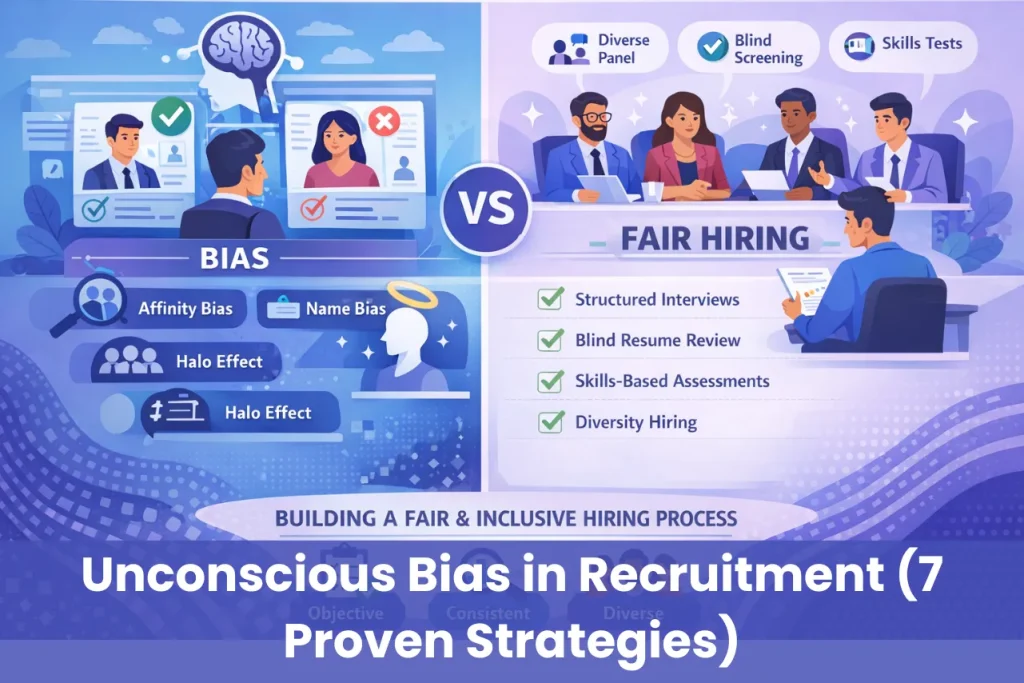
Bias can appear at any stage of hiring, often without intentional discrimination.
Common forms of hiring bias include:
Affinity Bias
Affinity bias occurs when recruiters or hiring managers favor candidates who share similar backgrounds, interests, communication styles, or experiences.
For example, a manager may feel an immediate connection with a candidate because they attended the same school or worked in a similar environment. This connection may unintentionally influence the evaluation process.
Confirmation Bias
Confirmation bias happens when decision-makers look for information that supports an initial impression.
A recruiter who believes a candidate is highly qualified may focus on positive details while overlooking concerns. The opposite can also happen when an early negative impression affects the entire evaluation.
Similarity Bias
Similarity bias occurs when organizations prioritize candidates who resemble existing employees or leadership teams.
While cultural compatibility matters, focusing too heavily on similarity can limit different perspectives and reduce innovation.
First Impression Bias
Early impressions during interviews can strongly influence later judgments.
Factors unrelated to job performance, such as communication style or personality preferences, may affect how candidates are perceived.
Recognizing these patterns helps organizations design better hiring systems.
Step 1: Create Inclusive Job Descriptions
The recruitment process begins before candidates apply. Job descriptions influence who feels encouraged to submit an application.
Poorly written job postings can unintentionally discourage qualified candidates or create unnecessary barriers.
Focus on Essential Skills and Requirements
Organizations should carefully review job requirements and separate essential qualifications from preferred ones.
Ask:
- Is this requirement truly necessary for success?
- Does this qualification reflect the actual responsibilities?
- Are we excluding capable candidates unnecessarily?
Overly restrictive job descriptions may reduce the available talent pool.
Use Clear and Accessible Language
Inclusive job descriptions should:
- Avoid unnecessary jargon
- Use straightforward language
- Clearly explain responsibilities
- Focus on outcomes rather than assumptions
- Highlight opportunities for growth
Candidates should be able to understand the role and evaluate whether they are a good fit.
Avoid Biased Language
Certain words may unintentionally appeal more strongly to some groups than others.
Review job descriptions for:
- Gender-coded language
- Excessive emphasis on competition
- Unclear expectations
- Requirements unrelated to performance
The goal is to communicate opportunity while focusing on what truly matters for success.
Highlight Inclusive Workplace Practices
Candidates increasingly consider workplace culture when choosing employers.
Job postings can demonstrate commitment to inclusion by mentioning:
- Development opportunities
- Flexible work options where available
- Team collaboration
- Supportive workplace practices
- Commitment to employee growth
A welcoming message can improve candidate engagement.
Step 2: Build a Fair Recruitment Process
Consistency is one of the most effective ways to reduce bias.
A structured process helps ensure candidates are evaluated using the same standards.
Define Evaluation Criteria Before Interviews
Before meeting candidates, hiring teams should agree on:
- Required skills
- Key competencies
- Success indicators
- Scoring methods
- Interview questions
Creating criteria in advance prevents decisions from being shaped primarily by personal impressions.
Use Structured Interviews
Unstructured interviews often depend heavily on conversation flow and interviewer preferences.
Structured interviews improve fairness by ensuring:
- Candidates receive similar questions.
- Responses are evaluated consistently.
- Interviewers focus on job-related skills.
- Decisions are based on evidence.
A consistent process creates a stronger comparison between candidates.
Train Interviewers
Anyone involved in hiring should understand how bias can influence decisions.
Training can help interviewers:
- Recognize common biases
- Ask fair questions
- Evaluate evidence objectively
- Avoid assumptions
- Provide consistent feedback
Hiring quality improves when everyone understands their role in creating a fair process.
Step 3: Design Inclusive Candidate Assessments

Assessments can provide valuable information about candidate capabilities, but only when designed properly.
Poor assessments may introduce unnecessary barriers unrelated to job performance.
Measure Relevant Skills
Effective assessments should reflect real job responsibilities.
For example:
- Writing roles may include writing samples.
- Technical roles may include practical problem-solving tasks.
- Leadership roles may include scenario-based exercises.
Candidates should be evaluated on their ability to perform the work.
Provide Clear Instructions
Candidates perform better when they understand:
- What is expected
- How the assessment will be evaluated
- How much time is required
- What resources are allowed
Transparency creates a more positive and equitable experience.
Consider Accessibility
Organizations should ensure assessments are accessible to candidates with different needs.
This may include:
- Providing alternative formats
- Allowing reasonable adjustments
- Using accessible technology
- Offering clear communication throughout the process
Accessibility ensures qualified candidates are not excluded by avoidable barriers.
Step 4: Improve the Interview Experience
The interview process shapes how candidates view the organization.
Even candidates who are not selected may become customers, industry contacts, or future applicants.
A positive candidate experience strengthens employer reputation.
Communicate Clearly
Candidates appreciate:
- Timely updates
- Clear expectations
- Information about interview stages
- Honest timelines
- Respectful communication
Lack of communication can create frustration and damage trust.
Create a Welcoming Environment
Interviewers should:
- Introduce themselves clearly
- Explain the interview format
- Encourage questions
- Listen actively
- Avoid making assumptions
Candidates should feel they are being evaluated fairly and respectfully.
Allow Candidates to Share Their Strengths
Interviews should provide opportunities for candidates to demonstrate their capabilities.
Effective interviewers avoid focusing only on one type of communication style or personality.
A candidate who is thoughtful and reflective may demonstrate equal or greater capability than someone who is naturally more outspoken.
Step 5: Make Better Hiring Decisions
The final decision stage is where organizations should be especially careful.
Strong candidates can be overlooked when decisions rely too heavily on instinct.
Use Evidence-Based Evaluation
Hiring teams should discuss:
- How candidates performed against criteria
- Specific examples from interviews
- Assessment results
- Relevant experience
Avoid vague statements such as:
- “They seem like a good fit.”
- “I just have a feeling about them.”
- “I can see them fitting in here.”
Instead, focus on measurable evidence.
Involve Multiple Perspectives
A single person’s opinion can be influenced by individual preferences or experiences.
Including multiple reviewers helps:
- Reduce individual bias
- Encourage balanced discussion
- Improve decision quality
Different perspectives often lead to stronger hiring outcomes.
Document Decisions
Keeping clear records of evaluation criteria and decisions improves transparency.
Documentation helps organizations:
- Review processes
- Identify patterns
- Improve future hiring
- Maintain accountability
Step 6: Continue Improving After Hiring

Inclusive hiring does not end when an offer is accepted.
The employee experience after joining influences whether new hires feel welcomed and supported.
Organizations should focus on:
- Inclusive onboarding
- Early relationship-building
- Clear role expectations
- Access to resources
- Manager support
- Career development opportunities
A fair hiring process should lead into an inclusive workplace experience.
Measuring Inclusive Hiring Success
Organizations should regularly evaluate whether recruitment practices are creating better outcomes.
Useful metrics include:
- Candidate diversity throughout the hiring funnel
- Interview progression rates
- Offer acceptance rates
- Candidate satisfaction
- Time to hire
- Employee retention after hiring
- New hire engagement
Data helps organizations identify where improvements are needed.
Common Mistakes to Avoid
Even organizations with good intentions can create barriers during recruitment.
Common mistakes include:
Relying on “Culture Fit” Alone
Culture fit can become a reason to hire people who resemble existing employees.
Instead, focus on culture contribution—whether candidates bring skills, perspectives, and behaviors that strengthen the organization.
Overvaluing Confidence
Confidence does not always equal capability.
Hiring decisions should focus on demonstrated skills, achievements, and potential.
Ignoring Candidate Feedback
Candidates can provide valuable insights into the recruitment experience.
Feedback helps organizations identify unclear communication, unnecessary barriers, and opportunities for improvement.
Building a More Inclusive Recruitment Strategy
Inclusive hiring requires intentional design, consistent processes, and continuous improvement. Organizations can reduce bias by improving job descriptions, structuring interviews, creating fair assessments, and providing respectful candidate experiences.
The goal is not simply to increase diversity in hiring—it is to create a recruitment system where every qualified candidate has a fair opportunity to demonstrate their abilities.
When organizations remove unnecessary barriers and make evidence-based decisions, they build stronger teams, improve employee experiences, and create workplaces where talented individuals from different backgrounds can contribute and succeed.