


Diversity, Equity, and Inclusion (DEI) initiatives have become a strategic priority for organizations seeking to build stronger teams, improve employee experiences, and drive long-term business success. However, implementing DEI programs is only part of the journey. To understand whether these efforts are creating meaningful change, organizations must measure their progress using relevant and actionable metrics.
Too often, companies focus solely on representation data, such as workforce demographics. While representation is important, it tells only part of the story. A truly inclusive workplace is one where employees not only join the organization but also feel valued, have equal opportunities to grow, and choose to stay.
The most effective DEI measurement strategies combine quantitative data with employee feedback to provide a comprehensive view of workplace culture. This guide explores the key metrics that matter most and how business leaders can use them to strengthen inclusion, improve decision-making, and create lasting organizational impact.
Why Measuring DEI Is Essential
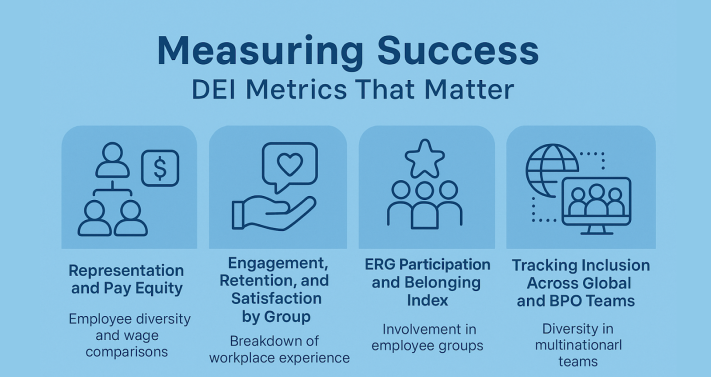
Without clear metrics, organizations may struggle to determine whether their DEI efforts are producing meaningful results. Good intentions alone cannot demonstrate progress or identify areas for improvement.
Tracking DEI performance helps organizations:
- Measure progress toward business goals
- Identify workplace barriers
- Improve employee experiences
- Increase accountability
- Support informed decision-making
- Allocate resources effectively
- Build trust through transparency
Regular measurement transforms DEI from a one-time initiative into an ongoing business strategy.
Look Beyond Representation
Representation is often the first metric organizations examine because it is relatively easy to measure. However, diversity alone does not guarantee inclusion.
An organization may recruit employees from diverse backgrounds while still facing challenges related to employee engagement, career advancement, or workplace culture.
A balanced measurement framework should evaluate both who is in the organization and how employees experience the workplace.
Representation Metrics
Representation measures the diversity of the workforce across different levels of the organization.
Key indicators include:
- Workforce demographics
- Leadership representation
- Management diversity
- Recruitment outcomes
- Candidate pipeline diversity
- Department-level representation
Tracking representation helps organizations understand whether hiring and advancement practices are creating opportunities across the business.
Questions to Consider
Leaders should regularly ask:
- Does our workforce reflect the talent available in our industry?
- Are leadership teams becoming more representative over time?
- Are certain departments significantly less diverse than others?
Representation provides valuable insight but should always be considered alongside other DEI metrics.
Belonging: The Metric Behind Inclusion
Belonging measures whether employees feel accepted, respected, and valued within the organization.
Employees who experience a strong sense of belonging are generally more likely to:
- Participate actively in discussions
- Share innovative ideas
- Collaborate across teams
- Remain engaged
- Build long-term careers within the company
Measuring Belonging
Organizations often evaluate belonging through employee surveys that explore topics such as:
- Feeling respected by colleagues
- Confidence in expressing ideas
- Fair treatment
- Trust in leadership
- Comfort participating during meetings
- Sense of inclusion within teams
Belonging is one of the strongest indicators of whether diversity efforts are translating into meaningful employee experiences.
Employee Retention
Retention reflects whether employees choose to remain with the organization over time.
High turnover can indicate challenges related to workplace culture, career development, leadership, or employee engagement.
Useful retention metrics include:
- Overall retention rate
- Voluntary turnover
- Retention across departments
- Leadership retention
- Retention following promotions
- Early-career turnover
Examining retention trends across different employee groups may help identify opportunities to improve workplace experiences and career support.
Employee Engagement
Engagement measures employees’ emotional commitment to their work and the organization.
Highly engaged employees are more likely to:
- Deliver strong performance
- Collaborate effectively
- Recommend their employer
- Contribute new ideas
- Stay with the organization
Engagement Indicators
Organizations commonly monitor:
- Employee engagement survey scores
- Participation in company initiatives
- Manager feedback quality
- Team collaboration
- Employee recognition
- Internal communication effectiveness
Engagement and inclusion often reinforce one another. Employees who feel included tend to become more engaged, while engaged employees contribute more actively to organizational success.
Promotion and Career Advancement

Equal access to career growth is a critical component of equity.
Promotion metrics help organizations evaluate whether advancement opportunities are distributed fairly.
Key measures include:
- Internal promotion rates
- Leadership development participation
- Career progression timelines
- Lateral mobility
- Access to mentorship
- Participation in professional development programs
Questions Leaders Should Ask
- Are promotion decisions based on consistent criteria?
- Do employees across the organization have equal access to growth opportunities?
- Are leadership development programs accessible to a broad range of employees?
Monitoring promotion trends helps organizations identify potential barriers to advancement.
Inclusion Indicators
Inclusion is more difficult to measure than representation, but it often has the greatest influence on workplace culture.
Organizations can assess inclusion by examining whether employees feel comfortable contributing fully to the workplace.
Common inclusion indicators include:
- Psychological safety
- Participation during meetings
- Employee voice
- Collaboration across teams
- Perceptions of fairness
- Confidence in leadership
These indicators provide insight into everyday workplace experiences.
Recruitment Metrics
Hiring data helps organizations evaluate whether recruitment practices support diverse talent acquisition.
Useful recruitment metrics include:
- Diversity of applicant pools
- Interview progression rates
- Offer acceptance rates
- Hiring outcomes
- Time to hire
- Candidate experience feedback
Recruitment metrics should focus on identifying opportunities to improve hiring processes rather than establishing quotas.
Learning and Development Participation
Professional growth opportunities should be available to all employees.
Organizations can measure:
- Training participation
- Leadership development enrollment
- Mentorship program involvement
- Certification completion
- Skill development opportunities
These metrics help determine whether employees have equitable access to career-building resources.
Leadership Accountability
DEI initiatives become more effective when leaders actively support and model inclusive behaviors.
Organizations may evaluate leadership through:
- Inclusive leadership competencies
- Employee feedback
- Team engagement scores
- Leadership development participation
- Progress toward organizational inclusion goals
Accountability encourages leaders to integrate inclusion into everyday decision-making rather than treating it as a separate initiative.
Employee Feedback: The Missing Piece
Numbers alone cannot fully explain employee experiences.
Qualitative feedback provides valuable context that helps organizations understand why certain trends exist.
Useful feedback methods include:
- Anonymous employee surveys
- Focus groups
- One-on-one conversations
- Stay interviews
- Exit interviews
- Employee resource group discussions
Combining data with employee perspectives creates a more accurate picture of workplace culture.
Building a Balanced DEI Dashboard

Rather than focusing on a single measure, organizations benefit from tracking a combination of indicators.
An effective DEI dashboard may include:
Workforce Metrics
- Representation
- Recruitment outcomes
- Leadership diversity
- Promotion rates
Employee Experience Metrics
- Belonging
- Engagement
- Psychological safety
- Employee feedback
Business Metrics
- Retention
- Internal mobility
- Learning participation
- Leadership accountability
Reviewing these metrics together helps leaders identify relationships between workplace culture and business performance.
Common Mistakes When Measuring DEI
Organizations sometimes limit the effectiveness of their DEI efforts by focusing on incomplete or misleading data.
Common mistakes include:
Measuring Only Representation
Representation is important, but it does not reveal whether employees feel included, supported, or able to advance.
Collecting Data Without Taking Action
Employees are more likely to participate in surveys when they see that feedback leads to meaningful improvements.
Sharing action plans and progress builds trust and credibility.
Focusing Only on Annual Reviews
DEI should be measured continuously rather than once a year.
Regular check-ins allow organizations to identify challenges early and adjust strategies as workplace needs evolve.
Ignoring Qualitative Insights
Employee experiences cannot always be captured through numbers alone.
Open conversations often reveal barriers that traditional metrics may overlook.
Turning Insights Into Action
Collecting DEI data is valuable only if organizations use it to improve workplace practices.
Leaders should:
- Review DEI metrics regularly.
- Share findings transparently with employees.
- Identify areas requiring improvement.
- Develop measurable action plans.
- Monitor progress over time.
- Adjust strategies based on employee feedback and business outcomes.
Continuous improvement should become part of everyday leadership and organizational planning.
Measuring What Truly Matters
Successful DEI strategies are built on more than workforce demographics. While representation provides an important foundation, organizations achieve lasting progress by also measuring belonging, employee engagement, retention, promotion opportunities, inclusion, and leadership accountability.
By combining meaningful metrics with honest employee feedback, business leaders gain a deeper understanding of how people experience the workplace and where improvements are needed. This balanced approach enables organizations to create fairer systems, strengthen employee trust, and build cultures where individuals can contribute, grow, and succeed.
Ultimately, the most valuable DEI metrics are those that lead to informed action. When organizations consistently measure what matters and respond thoughtfully to the insights they gather, they create more inclusive workplaces that support both employee well-being and long-term business performance.